
Small Town Author, Big City Mysteries
Writing What You Research, Not Just What You Know

"Write what you know"
You’ve heard it, right? Maybe in a writing workshop, or from that well-meaning friend who read your first draft. It is probably on of the most common pieces of writing advice I’ve come across. In my opinion, it is also one of the most limiting pieces of advice ever given to writers.
If I'd followed that rule strictly, Katherine Carson would be solving mysteries in rural Kentucky. Stolen tractors. Property line disputes. Maybe the occasional heated argument at the church potluck.
Don’t get me wrong—those could make great stories. But they aren’t my stories.
“Write what you know.”
You’ve heard it, right? Maybe in a writing workshop, or from that well-meaning friend who read your first draft. I heard it constantly when I started writing the Katherine Carson mysteries, and honestly? It nearly stopped me before I began.
Here’s the thing: if I’d taken that advice literally, Katherine would be solving mysteries in rural Kentucky. Stolen tractors. Property line disputes. Maybe the occasional heated argument at the county fair.
Don’t get me wrong—those could make great stories. But they weren’t my stories.
What kept calling to me was something completely different. Sophisticated art galleries. Complex urban neighborhoods. International intrigue unfolding in a major port city. All the things I didn’t know firsthand.
And Baltimore? Baltimore fit perfectly.
And I’m sitting here in my home office in Shelbyville, Kentucky, wondering if I’m completely delusional for trying to write about a city I don’t live in.
The Advantage of Outsider Perspective
Sometimes geographic distance can actually work for you if you approach it right.
Think about it. When you’ve lived somewhere your whole life, you stop seeing it. That quirky building on the corner? You don’t notice it anymore. The way people talk, the local traditions, the weird little details that make a place unique—they all fade into background noise.
But as an outsider? Those details practically glow.
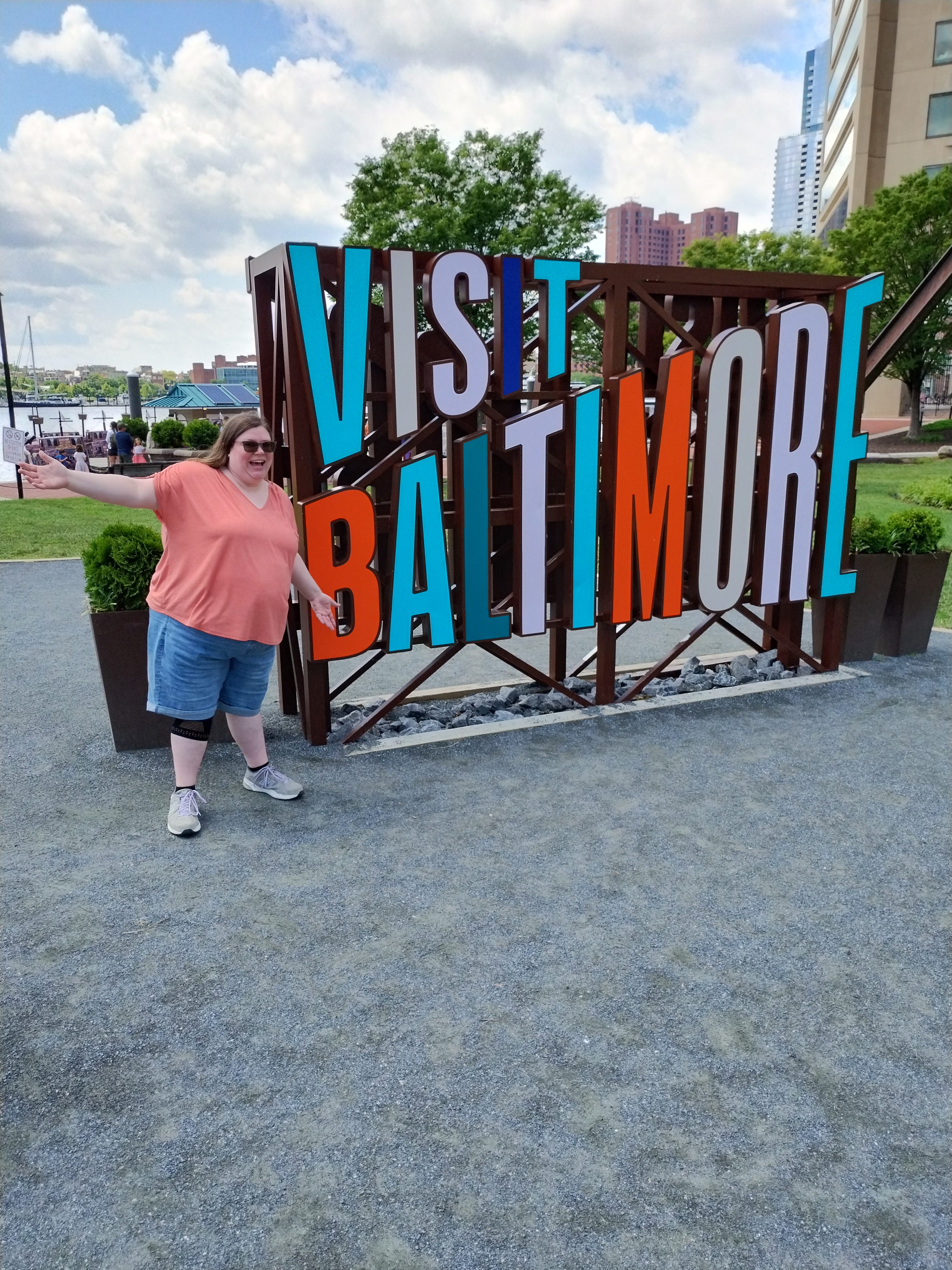
As a small-town writer exploring Baltimore, I notice details that locals might take for granted. The way historic rowhouses sit right next to sleek modern buildings. How each neighborhood has its own complete personality—like they’re different cities entirely. The contrast between the polished Inner Harbor and the grittier industrial waterfront. These observations become crucial atmospheric details in my mysteries.
Walking through Fells Point’s cobblestone streets for the first time, I felt the maritime history. When I stumbled into Lexington Market, overwhelmed by the noise and energy and dozens of vendors all talking at once, I suddenly understood how information travels through informal networks in a city. And my Kentucky perspective makes those big city quirks stand out to me even more.
After I’ve experienced a place, I sit down and write everything I remember. What did it feel like to walk those streets? What sounds stayed with me? How did the afternoon light hit the buildings? What smells made me turn my head?
These sensory details are what make settings feel real. And they only come from actually being there.
Layered Research Strategies
Of course, being a tourist isn’t enough. (I wish it were—that would make my life easier.) I’ve developed what I call “layered research,” which is probably a fancy term for “obsessively learning everything.”
Neighborhood Deep Dives: I research each Baltimore neighborhood's history, demographics, and character. Mt. Vernon’s historic mansions suggest completely different story possibilities than Canton’s maritime heritage or Upton’s community arts scene. When I understand these distinctions, I can place characters and conflicts where they actually belong, not just where it’s convenient for my plot.
Right now, for Beyond Tarnish (coming this January!), I’m deep into researching the neighborhood where Sammi’s family lives. Because when your character’s family comes under scrutiny, you need to understand not just the house, but the whole community context. What do the neighbors notice? What gets talked about? How does reputation work in that specific area?
Did I mention I have spreadsheets for this? Because I absolutely have spreadsheets.
Local Resources: I read Baltimore newspapers, follow local blogs, and study city websites to understand current issues and concerns. What are locals talking about? What challenges does the city face? What makes locals roll their eyes?
This context is the difference between characters who feel like they live in Baltimore and characters who are obviously tourists in disguise.
Professional Consultation: When Katherine investigates within specific industries or institutions, I research those environments thoroughly. For Framed, which is set in the art world, I went down a rabbit hole learning about gallery operations, authentication processes, how the business side of fine art actually works. I’ve also researched police procedures, private investigation licensing requirements, corporate structures—anything that touches the story.
Historical Context: Setting my books in 2009 requires understanding how Baltimore looked and felt then, not just how it appears now. I research everything from what restaurants were operating to how technology was used to what social issues were prominent.
I once spent two hours trying to figure out if a specific coffee shop existed in 2009. This is my life now.
Sensory Details: Writing about an unfamiliar place is honestly, terrifying at first. Vague descriptions fool no one. But precise, researched details convince readers you know what you're talking about.
When Katherine Carson walks through the Walters Art Museum, I can describe specific galleries because I’ve stood in them. When she navigates neighborhoods, I use real street names because I’ve walked them. When she interacts with institutions, I understand how they actually operate because I’ve done the research.
Each accurate detail builds trust. And that trust makes readers believe the next plot point, and the next one, and the story I’m trying to tell.
Why I’m Glad I Didn’t Listen to “Write What You Know”
Writing outside your geographic experience requires extra work. I won’t lie about that.
But it’s rewarding work.
Every research trip feels like an adventure. Every local detail I discover feels like treasure. Every authentic moment I capture on the page feels like a small victory. And right now, as I’m drafting scenes where Sammi’s world gets turned upside down in Beyond Tarnish, every new piece of Baltimore I understand helps me write her story more truthfully.
Limiting myself to only familiar settings would mean limiting my storytelling possibilities. Katherine Carson belongs in Baltimore not because I’m from there, but because that’s where her stories need to unfold.
Facts matter. But emotional accuracy matters more.
Readers don’t need every single street name to be real (though some should be). They don’t need a perfect map of the city. What they need is to feel like they’re experiencing an authentic place.
So I focus on capturing Baltimore’s personality. Its blend of sophistication and grit. The fierce neighborhood pride. The maritime heritage woven through everything. The artistic soul.
These atmospheric elements? Way more important than perfect geographic precision.
Of course, I still fact-check obsessively. But when I have to choose between emotional truth and factual precision, emotional truth wins.
Don’t let “write what you know” stop you from writing the stories that call to you. Because “what you know” can expand. It just takes curiosity, respect, and a willingness to do the work.
After all, good research can take you anywhere.
That’s free access to every post and every update in addition to the regular newsletter and occasional updates.
I believe Stephen King talked about this in his “On Writing” book. If we stuck strictly to “writing what we know”, then how would Star Wars have been created? Or Star Trek? The way he framed it: “Write what is true”. And great idea with the research spreadsheet. I’ve got a rather daunting kids book series I will need to do research for. The first book is set in the Arctic. I guess I better find some snow boots…